If you have VHS tapes sitting in your attic, basement, or closet—ones you’ve been meaning to watch “someday”—I have news you need to hear.
Your tapes are dying. Right now. Today.
I’m Tommy, and I’ve been transferring VHS tapes to digital for over 40 years here in South Jersey. I wish I could tell you that your tapes will last forever if you just store them properly. But that would be a lie.
The truth is more urgent than that.
THE UNCOMFORTABLE TRUTH ABOUT VHS TAPES
Here’s what most people don’t realize: VHS tapes were never designed to last forever.
When VHS became popular in the 1980s, manufacturers estimated tapes would last 10-25 years under ideal conditions. We’re now 30-40 years past when most home videos were recorded.
The clock isn’t just ticking—it’s almost run out.
Every single day that passes, your VHS tapes are:
- Losing magnetic charge
- Breaking down chemically
- Becoming more brittle
- Degrading in quality
- Moving closer to being unplayable
And here’s the part that keeps me up at night: Once a VHS tape is too far gone, even professionals like me can’t save it.
HOW LONG DO VHS TAPES ACTUALLY LAST?
The answer depends on several factors, but here’s what four decades of experience has taught me:
Under Perfect Conditions: 20-30 years
- Stored at 65-70°F
- Humidity controlled at 40-50%
- Kept away from magnetic fields
- Never played (yes, playing them causes wear)
- Stored vertically in cases
Under Typical Home Conditions: 10-20 years
- Attics (too hot)
- Basements (too humid)
- Closets (temperature fluctuates)
- Played occasionally over the years
- Some stored horizontally or without cases
Under Poor Conditions: Already degraded
- Extreme temperature swings
- High humidity (mold growth)
- Direct sunlight exposure
- Stored near speakers or electronics (magnetic interference)
- Heavily played over the years
Here’s the reality: If your tapes were recorded in the 1980s or early 1990s, they’re living on borrowed time—regardless of how well you stored them.
THE 7 SIGNS YOUR VHS TAPES ARE DETERIORATING
I see hundreds of tapes every month. Here are the warning signs I look for:
1. Sticky Shed Syndrome
The magnetic coating becomes sticky and sheds off the tape. When you play it, you’ll hear squealing sounds and see poor picture quality.
What I see: Brown or black residue on the tape heads after playing.
2. Mold Growth
White, gray, or black spots on the tape itself. This happens when tapes are stored in humid environments like basements or attics.
What I see: Fuzzy spots that look like dust but don’t wipe away.
3. Tape Brittleness
The tape becomes fragile and breaks easily when played or handled.
What I see: Tapes that crack or snap when I try to rewind them.
4. Color Fading
The image looks washed out, with colors appearing dull or having a pink/red tint.
What you’ll see: Your once-vibrant birthday party video looks like it’s behind a fog.
5. Audio Degradation
Voices sound muffled, warbled, or have a “watery” quality. Sometimes the audio drops out completely.
What you’ll hear: “Wwwaaavvvyy” sounding voices or complete silence.
6. Tracking Issues
White lines, snow, or distortion that appears randomly throughout the video—even on a clean VCR.
What you’ll see: Horizontal lines across the screen that won’t go away no matter how much you adjust the tracking.
7. Physical Damage
Warped cassette shells, broken tape, or visible mold on the exterior.
What I see: Tapes that won’t even fit into a VCR properly.
WHY VHS TAPES DETERIORATE (THE SCIENCE)
Let me explain what’s happening at a molecular level—in plain English.
The Magnetic Coating is Failing
VHS tape is made of plastic film coated with magnetic particles suspended in a binder. Over time, this binder breaks down through a process called “hydrolysis” (reaction with moisture in the air).
Think of it like old rubber bands that become brittle and snap. The same thing is happening to your tapes.
The Tape Itself is Breaking Down
The plastic base layer degrades from:
- Temperature fluctuations (expansion and contraction)
- UV light exposure
- Oxidation (reaction with oxygen)
- Physical stress from being wound tight
Playing Makes It Worse
Every time you play a VHS tape:
- The tape rubs against the VCR heads (physical wear)
- It stretches slightly (permanent deformation)
- Heat from the VCR accelerates chemical breakdown
- You risk getting it eaten by a worn-out VCR
This is why I always tell people: If you have tapes you haven’t watched in years, don’t play them. Bring them to a professional who has the right equipment to transfer them safely.
“BUT MY TAPES STILL PLAY FINE!”
I hear this all the time, and I understand why people think this way. But here’s what I’ve learned from 40 years in this business:
Just because a tape plays today doesn’t mean it will play tomorrow.
I can’t tell you how many customers have called me saying, “I watched this tape six months ago and it was fine. Now it won’t play at all.”
Tape deterioration isn’t linear—it accelerates. Once it starts, it happens fast.
THE TAPES I CAN’T SAVE (AND WHY YOU SHOULD TRANSFER NOW)
In my career, I’ve saved thousands of tapes that other services said were “too damaged.” But even I have limits.
Tapes I Can Usually Save:
- Minor mold (we can clean it)
- Sticky shed syndrome (we can bake it)
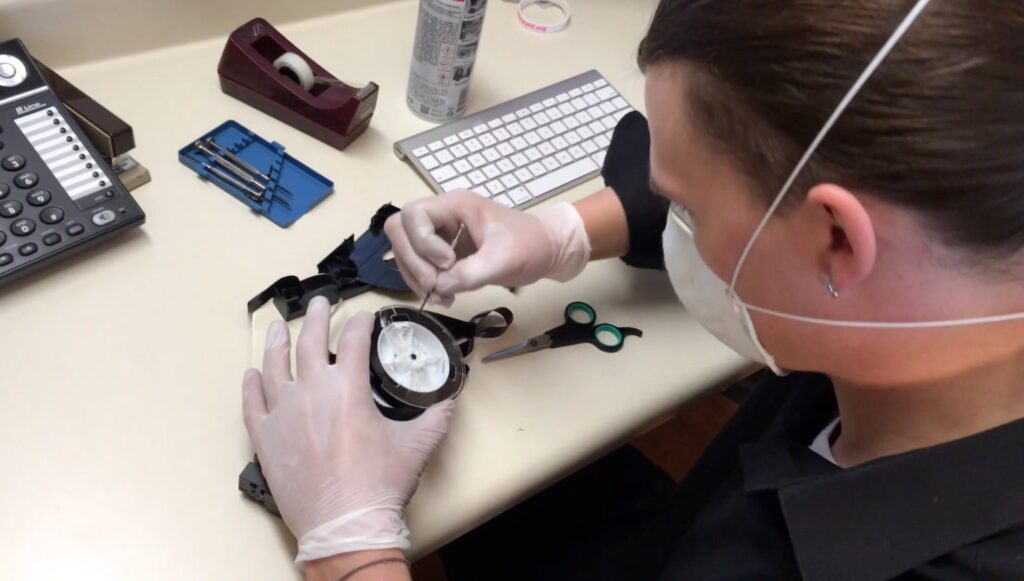
- Broken shells (we can repair them)
- Minor tracking issues (professional equipment helps)
Tapes I Sometimes Can’t Save:
- Severe mold that’s eaten through the magnetic coating
- Tapes that have been stored in extreme heat (demagnetized)
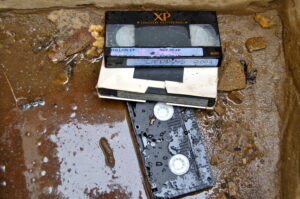
- Heavy water damage where the coating has separated
- Tapes that have been chewed by a VCR and re-spooled incorrectly
Tapes Nobody Can Save:
- Complete demagnetization (blank tape)
- Tape that’s deteriorated into dust
- Fire or flood damage that’s destroyed the magnetic layer
The longer you wait, the more likely your tapes move from the “can save” category to the “can’t save” category.
“SO WHEN SHOULD I TRANSFER MY TAPES?”
Yesterday.
But since we can’t go back in time, the answer is: Right now. Today. This week.
Here’s my honest professional advice based on when your tapes were recorded:
1980s Tapes: URGENT
These are 35-40+ years old. Transfer them immediately. These are the ones I see fail most often.
1990s Tapes: HIGH PRIORITY
These are 25-35 years old. You’re already past the manufacturer’s expected lifespan. Don’t wait.
Early 2000s Tapes: MODERATE PRIORITY
These are 20-25 years old. You have a bit more time, but not much. Start planning now.
2005+ Tapes: LOWER PRIORITY (BUT STILL DO IT)
These are under 20 years old. They’re still deteriorating, just slower. Plus, by 2030, working VCRs will be nearly impossible to find.
THE VCR PROBLEM NOBODY TALKS ABOUT
Even if your tapes last another 10 years, here’s the problem: VCRs are dying too.
The last VCR was manufactured in 2016. That was 8 years ago.
What does this mean?
- Working VCRs are becoming rare
- Replacement parts don’t exist
- Repair technicians are retiring
- Even the best VCRs have a limited lifespan
In 5-10 years, even if your tapes are perfect, you won’t have anything to play them on.
WHAT YOU SHOULD DO RIGHT NOW
If you have VHS tapes, here’s my recommendation:
Step 1: Find Your Tapes
Look in:
- Attics and basements
- Closets and storage units
- Parents’ or grandparents’ houses
- Your kids’ old bedroom closets
Step 2: Assess Their Condition
Look for the warning signs I mentioned above. Even if they look fine, assume they’re deteriorating.
Step 3: Prioritize
Which tapes matter most?
- Weddings
- Baby’s first steps
- Birthdays and holidays
- Deceased loved ones
- Irreplaceable moments
Start with those.
Step 4: Transfer to Digital NOW
Don’t wait for the “right time.” There is no right time. The right time was 10 years ago. The second-best time is now.
WHY PROFESSIONAL TRANSFER MATTERS
You might be tempted to buy a VHS-to-digital converter online and do it yourself. I understand—it seems cheaper.
But here’s what you need to know:
Consumer-grade equipment:
- Uses low-quality capture
- Can’t repair damaged tapes
- Won’t optimize video quality
- Might damage tapes further
Professional equipment (what I use):
- Broadcast-quality capture cards
- Time-base correctors (fix tracking issues)
- Professional VCRs designed for transfers
- Software to enhance color, audio, and stability
- Ability to repair tapes before transfer
Plus, I’ve transferred tens of thousands of tapes. I know how to handle damaged media, optimize quality, and save tapes that seem hopeless.
THE BOTTOM LINE
Your VHS tapes won’t last forever. In fact, many won’t last another 5 years.
Those first steps, birthday parties, weddings, and everyday moments—the memories that make up your family’s story—are fading away. Every day you wait is a day closer to losing them forever.
But here’s the good news: If you act now, we can save them.
I’ve been doing this for 40 years right here in South Jersey. I’ve saved memories people thought were lost forever. And I’d be honored to save yours.
READY TO PRESERVE YOUR MEMORIES?
Don’t let your family’s history disappear. Contact Tommy Productions today:
📞 Call: (856) 555-1234
📍 Visit: 123 Main Street, Franklinville, NJ 08322
💻 Online: [Get Free Quote]
Same-day quotes. 8-10 day turnaround. Rush service available.
Your memories are worth saving. Let’s do it before it’s too late.